
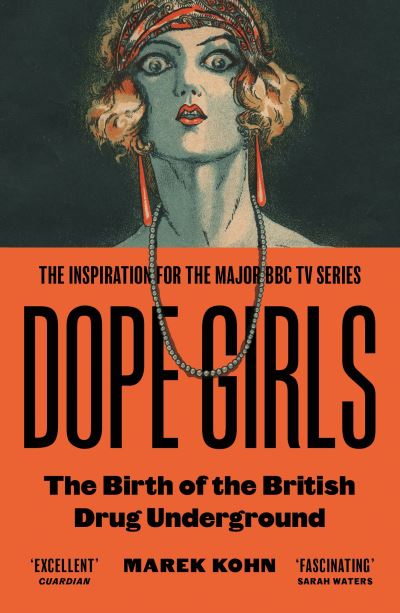
Dope girls

Marek Kohn

27th November 1918, London. Just 16 days after the end of the Great War, with the nation on its knees, Billie Carleton takes to the stage for the last time. She is found dead the next day in her bedroom. The cause of death: a cocaine overdose. The drugs were traced back to the Chinese community in Limehouse. And for nearly half a century, Billie Carleton’s case was to linger in popular imagination: a cautionary tale of the relationship between young girls, dope and predatory men. This is the story of how drug use was transformed into a national menace. It’s the story of how morphine and cocaine, once commonly available in any chemist’s shop, became the subject of vicious narratives targeting racial minorities and the working classes.

£10.99

Out of stock

Want to be notified when this product is back in stock?

Description

27th November 1918, London. Just 16 days after the end of the Great War, with the nation on its knees, Billie Carleton takes to the stage for the last time. She is found dead the next day in her bedroom. The cause of death: a cocaine overdose. The drugs were traced back to the Chinese community in Limehouse. And for nearly half a century, Billie Carleton’s case was to linger in popular imagination: a cautionary tale of the relationship between young girls, dope and predatory men. This is the story of how drug use was transformed into a national menace. It’s the story of how morphine and cocaine, once commonly available in any chemist’s shop, became the subject of vicious narratives targeting racial minorities and the working classes. And it’s a reflection on how drugs provide a way of speaking simultaneously about women, race, class, sex and the nation’s place in the world – both in at the turn of the 20th Century and in Britain today.

Additional information

Weight 0.186 kg
Dimensions 19.8 × 12.9 × 1.7 cm
Author

Publisher

Imprint

Cover

Paperback

Pages

288

Language

English

Edition
Dewey

362.290941 (edition:23)

Readership

General – Trade / Code: K