The international speculation may finally cease: we have selected our Books of the Year for 2025.
And what a year it’s been for books! It feels like it took more intellectual wrestling than usual to assemble our literary favourites published (or reissued) in the last 12 months. As always, each of our booksellers has chosen the five books by which they felt most enraptured, and written extensive notes on precisely why.
In previous years we have seen various levels of consensus among booksellers, but this is possibly the most disparate year ever. Are we becoming more individualistic in our tastes, or are we manifesting inter-bookseller tensions by ignoring each other’s recommendations? THAT’S NOT FOR HERE.
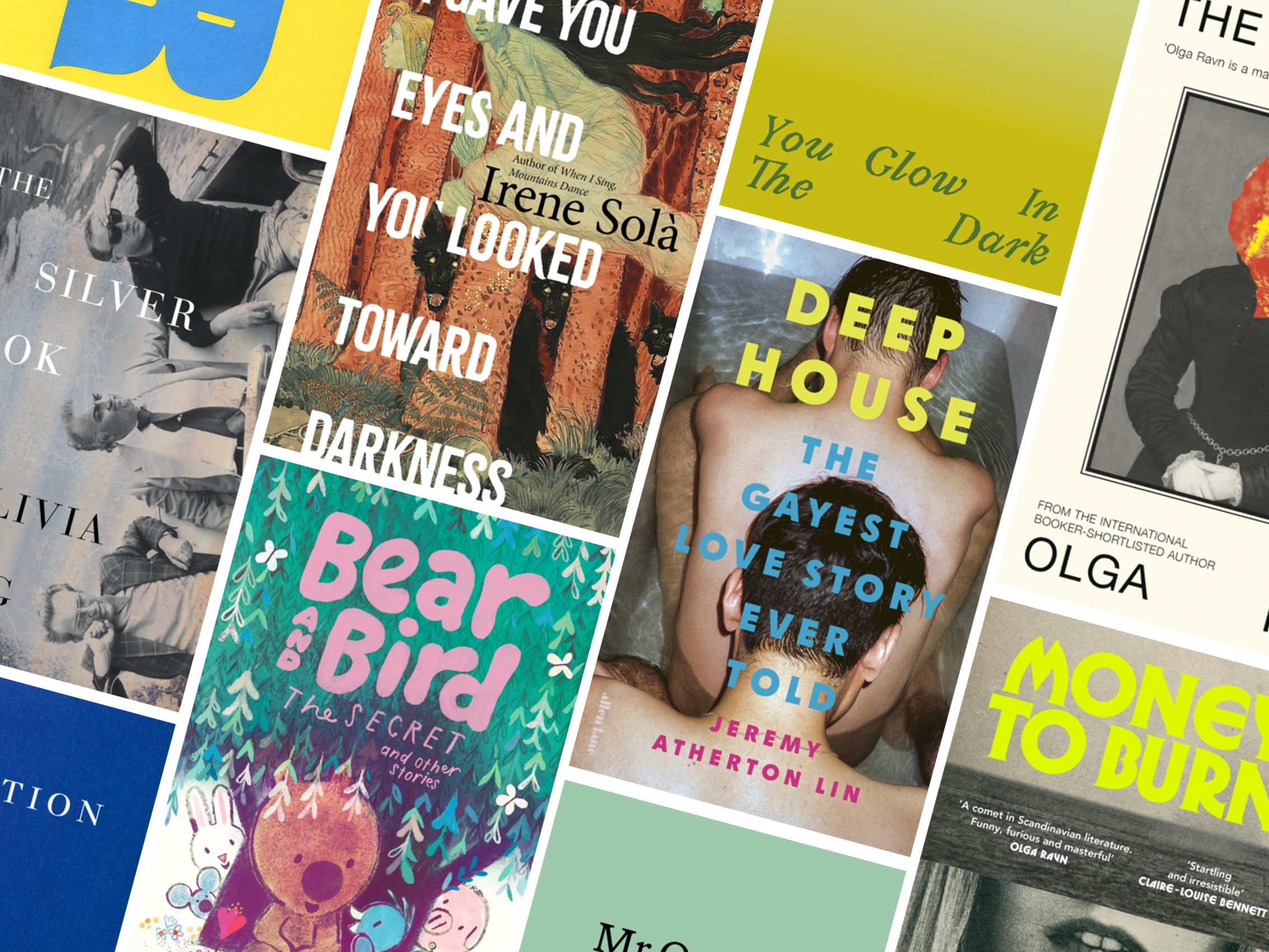
Despite this, there was a very strong consensus on one particular book, with a decisive THREE individual booksellers including it in their top five, thus hauling it to the very top of the list: congratulations to Olivia Laing, we know this will be among the greatest accolades accumulated in their storied career! Besides The Silver Book and the accompanying trio of bookseller enthusings, everything else is listed alphabetically rather than ranked, smoothing their indivisible qualities to a general and lasting gleam.
MORE STATS: Of the 23 books in the list, 17 were not written by men, 10 were translated into English so that we might read and love them, and the whole list features work from 11 countries. Read on to see which booksellers chose what, and from there you can form a parasocial relationship with the one to whom you feel most literarily similar.
The Silver Book, by Olivia Laing

In 1970s Venice, a troubled English artist and a flamboyant Italian production designer meet in a gallery. The artist, Nicholas, has fled a dark past in London, while the designer, Danilo Donati, is preparing for a production of Casanova, Frederico Fellini’s ode to decadence and excess. The two men fall in love and Danilo enlists Nicholas to be his assistant. But while Nicholas finds the extravagances of Casanova wild and exciting, he is disturbed by Danilo’s latest project, Salò, a visceral horror directed by the enigmatic Pier Paolo Pasolini.
It seems almost redundant to describe a novel about cinema as ‘visual’, yet I can’t help but marvel at the vividness with which Laing depicts the art of filmmaking. From blood-soaked garments to Caravaggio-style set pieces, it is no wonder Nicholas struggles to distinguish reality from illusion as he walks through the sets of the famed Cinecitta. And yet, at the heart of the novel is this delicate love story between Nicholas and Danilo, whose deep intimacy, while frenzied and passionate within the confines of their hotel room, is relegated to furtive glances and stolen kisses under the gaze of an aggressively homophobic society.
Much of the novel’s reality is dark and gritty, with an impending sense of dread as the country’s politics lurch further right. Yet, in a poetic, controlled style, Laing writes of a world from which beauty is created – in Fellini’s case, as a form of escapism, and in Pasolini’s, to reflect the brutality of the everyday.
Chosen by Tasha
It’s 1974, when Nicholas, a struggling English artist, meets Danilo Donati, the Italian costume designer behind the films of Fellini and Pasolini. It’s this world of Italian film-making, a world of sprawling fantasy and illusion, that Nicholas finds himself embroiled in. And it’s in this cinematic dream-scape that also acts as the backdrop for Nico and Dani’s affair, for a queer love story that is its own profusion of pretense, illusion and disguise. It’s a book in which nothing is simply what it appears to be, everything is a guise, at once fact and fiction.
The dreamlike escapism of cinema, and the brutal political-charged reality of 1970s Italy are also entwined. As film sets themselves can bring history into the present tense, the book acerbically reminds us that the past is never just in the past. The rise of neo-fascism and the radical right, the same political systems that frame the book, have only grown more powerful in the last 50 years. At once a blistering love-story, an appraisal of the artistic endeavour of cinema, and an investigation of an increasingly illusory and fragmented world, The Silver Book is Olivia Laing at their best!
Chosen by Holly
This is undoubtedly one of my favourite books of the year, but it’s the one that I’ve struggled to articulate my thoughts about the most. Everything I write about it feels very grandiose and superfluous, so please bear with my hyperbole, and take it as a hint that you should read and enjoy it as much as I did!
I read The Silver Book in a delicious haze of 70s cinema and Italian summer. Perhaps unremarkable to note, for a narrative that largely takes place on and around the film sets of Fellini and Passolini’s great masterpieces, that it gave me the same warm, nostalgic feeling as watching a timeless old movie. Laing’s protagonist Nicholas is an English artist who has fled London for Rome. He quickly meets the enchanting and powerful Danilo Donati, the real-life costume and set designer who takes him under his wing as both a lover and an assistant on the set of Fellini’s Cassanova and Passolini’s Salò. Their relationship is a whirlwind of glamour and graft on and off the film set, and the drama covers the real scandals that Nico is keen to escape from.
The novel is sweeping and dramatic, it focuses in on the small details of personal relationships, and then pans back to the political landscape of the time. For me, the beauty of the novel is in its sumptuous descriptions of the outlandish film sets, the elaborate costumes and the Italian feasts. It’s the perfect blend of gripping and romantic, and left me with a dreamy longing to be back in that world.
Chosen by Emily
Aerth, by Deborah Tomkins

This is one of those “I don’t know how you pulled this off” books. It’s a concept that’s so ambitious and Deborah Tomkins not only seriously delivers on that concept, but also just dives deeper and deeper into it, taking it as far as it can possibly go.
It’s also a book where the less you know, the better, because it goes in directions that are so unexpected and brilliant. So if you’re willing to trust me on this, just go for it and don’t keep reading!
Aerth follows the life story of Magnus from childhood through his life via a series of snapshots through his life on Aerth, an seemingly edenic, non-hierarchical Earth-ish planet (near-future society?) slowly descending into an ice age, through to his life travelling to Urth, its newly discovered twin planet where another seemingly human society has evolved in parallel.
If you’ve read and loved The Dispossessed you’re in for a treat, because this feels like a gentle nod to Ursula K Le Guin’s masterpiece if she’d written it in 21st century Britain. This is easily one of my most regularly recommended books of the year.
Chosen by Callum
A Leopard-Skin Hat by Anne Serre (trans. Mark Hutchinson)

The opening chapters of ‘A Leopard-Skin Hat’ see the narrator attempt to eulogise his friend, a troubled young woman named Fanny. Yet, when urged to write something ‘realistic’, the narrator finds he is unable to do so, and instead chooses to fictionalise her life as he remembers it. In the act of memorialisation, what purpose does the narrative serve when in opposition to the truth?
Through a series of vignettes, we learn of Fanny’s inherent unknowability, her contradictory nature which both liberates and exhausts the narrator, and their deep attachment to one another. Yet, despite their closeness, the narrator finds a distinct intangibility within his friend: Fanny observes her landscape with an idiosyncrasy indecipherable to many. It is this desire to understand, therefore, that prompts the narrator to create stories of his own invention. Writing with great delicacy, Serre posits the difficulty in distinguishing fact from fiction in a time of grief.
Chosen by Tasha
A State of Siege, by Janet Frame

Wow! Instant classic. Originally published in 1966 but brought to UK for maybe the first time (?) by Fitzcarraldo Editions this year.
It’s a “no plot all vibes” book in some senses. On paper, not a lot happens. And yes, there are a lot of vibes. But actually I think that undersells it because there’s just so much tension, and angst and melancholy and depth.
Our protagonist Malfred Signal, a retired art teacher, moves from her home on New Zealand’s south island up to a small island in the north following the death of her mother. It’s a pretty isolated community where she plans to spend the rest of her days away from other people painting the landscape, but she’s warned upon arrival of a certain “element” on the island. What follows is one long, incredibly tense night under siege: by her memories and imagination, by her past traumas, and, most threateningly of all, by a constant loud knocking at the door. The whole book more or less takes place within Malfred’s head, following her thoughts and her dreams as they spiral one way and another against a background of constant knocking. Utterly compelling, FFO Virginia Woolf, stormy weather, tortured artists…
Chosen by Callum
Bear and Bird: The Secret and Other Stories, by Jarvis

Jarvis’ Bear and Bird books are absolute favourites in our house. When I was thinking about my best books of the year, I thought about the excitement of bringing home The Secret and Other Stories, and I couldn’t not include it. Honestly these stories are so cleverly shaped, full of slapstick mishaps and so funny in a delightfully pure and simple way. Odd couple / unlikely friends Bear and Bird are the sweet, calamitous and slightly hopeless duo that you didn’t know you were missing from your life.
In The List, the first story in the collection, Bird’s shopping list is mixed up with a list of ‘naughty nicknames’, and literal hilarity ensues when Rabbit tries to ask for ‘Bubbly Snot Cakes’ at the supermarket. In The Secret, Bear goes to extreme lengths to avoid being told a secret that he knows he won’t be able to keep, and in the final story Bear and Bird find an excessively effective hiding place in a one-sided game of Hide and Seek. I love Jarvis’ wiggly line illustrations, and the elaborate back-ground details, like a bug building a house for itself complete with en-suite bathroom. This is the sixth and final book of short stories in the series; they have an enduring wisdom and charm and I know that my family will remember the joy of reading these together.
Chosen by Emily
Big Kiss, Bye-Bye, by Claire-Louise Bennett

Push me to pick a favourite from this year and it’ll be Big Kiss Bye-Bye. I am always drawn to character and atmosphere over plot, and this is perfectly pitched for me. Claire-Louise Bennett’s protagonist is a writer who has broken ties with her lover. She has packed all of her belongings and moved to a temporary cabin where he won’t be able to locate her, but she spends her days obsessing over whether to email him, convinced that she needs to repair the damage before it’s too late.
Bennett hints at the big details and obsesses over the tiny ones: the overwhelming size of a bouquet of flowers in her small rooms, a conversation overheard on a footpath, a disappointingly ‘pleasant’ email chain with an old professor.
Her ambivalence is peppered with moments of desire and passion, sometimes in her imagination and sometimes in her memories. In her uniquely ruminative style Bennett explores endings and asks how do we move on when there are feelings still there, and how does anything ever end?
Chosen by Emily
Deep House: The Gayest Love Story Ever Told, by Jeremy Atherton Lin

Ever since Gay Bar was published back in 2021 (a personal BOTY), I’ve been hunting for something that could fill the void. Jeremy’s work fits perfectly into the non-fiction that I love the most which sits happily between genres, such as Leslie Jamison’s The Recovering, Polly Barton’s Fifty Sounds, and Olivia Laing’s The Lonely City. Thankfully that void has now been filled, because Deep House: The Gayest Love Story Ever Told is an utterly compelling and at times almost nail-biting epic.
Deep House is a thorough history of anti-homosexual and anti-sodomy laws in the US (which is as detailed as it is shocking) as well as the long and nuanced fight for marriage equality told through the stories of its poster boys and legal activists, but equally through its outlaws, naysayers and iconoclasts.
In the midst of this political history, we follow Jeremy’s own trans-atlantic love story which is grounded and vivid, moving through dodgy apartments, questionable roommates, adopted cats, rural road trips and emergency room visits under the spectre of potential deportation – while the Defence of Marriage Act passes through congress and the possibility for any future legal right to residency for a same-sex partner becomes more and more out of reach. It’s both an essential civil rights chronicle and a deeply personal memoir of love across borders.
Plus, if you’re looking for some solid 2000s video rental shop content – it’s here and it’s extremely satisfying. I can’t recommend this book highly enough.
Chosen by Callum
Dreaming of Dead People, by Rosalind Belben

What a strange and beautiful book! Dreaming of Dead People is the confessions of a of a woman in the ‘middle of life’, who finds herself alone, without a partner or family; or, as she puts it, ‘not among the fuckers of this world’. She slowly learns to face her ‘spinsters fate’, confronting her loneliness and yearning for intimacy, learning to masturbate with an electric toothbrush. It’s the frankness and crudity of this book that makes it so striking; there is no performance or pretense, no hiding behind vague metaphors and allusion. Belben’s language gets close to life’s most inexpressible subjects: intimacy, loneliness, motherhood, grief, mortality… Oh, and there’s a whole section on Robin Hood. At once completely outlandish and still somehow true to the most human of experiences, Belben tows the line between the utterly bizarre and utterly convincing.
Chosen by Holly
Fair: The Life-Art of Translation, by Jen Calleja

Easily one of the most enjoyable reading experiences of my year. It’s just simply brilliant. Jen Calleja is a writer, publisher, poet and translator from German into English. Fair is structured after the form of the fair – art fair / book fair / fun fair – but the book is her fair, the Jen Calleja Fair, where stalls are different parts of her life, her creative practice, or an idealised future version of a world that adequately supports that practice, to which we are given a guided tour. Chapters are literally titled “Gift Shop Stand” or “S6 – Custard Pies” or “P509 – A Panel Discussion with Actors and Musicians on Translation”.
And while Fair is nominally a translation-memoir, it’s also about writing more generally and creative acts of all kinds from DIY punk to knitting – and somewhat of a defence of creativity and polemic on translation as an art. Fair is incredibly ambitious and high concept but also just funny, relatable, kind of juicy and really fun to read.
Chosen by Callum
Greyhound, by Joanna Pocock

This incredible memoir from Joanna Pocock is about two journeys that she took across America on Greyhound buses, seventeen years apart.
Pocock’s first trip was in 2006, after suffering several miscarriages, and her second was in 2023 after the pandemic restrictions were lifted. She reflects on some of the similarities, as well as the stark differences between these two journeys. There are cultural shifts between these two time periods, not least in the wake of the pandemic, but also the differences in travelling as a woman in her early forties, to a woman in her late fifties, and the identity changes that are perceived by other travellers. In her observations she gets across how debilitating it is to travel across America without a car, and how inaccessible and inflexible the booking systems, and the paring down of public transport has become.
From the window of the bus, Pocock can see the devastating environmental effects of capitalism, the inequalities it exacerbates, and the huge differences in the physical and cultural landscape on this same journey in less than twenty years.
We were lucky enough to host Joanna Pocock in conversation with Noreen Masud in September, and it was so brilliant to delve more into her writing journey and to hear her reading from Greyhound. It’s such an elegantly illuminating book and I learnt a lot from Joanna’s gently conveyed wisdom, both written and irl!
Chosen by Emily
House of Day, House of Night, by Olga Tokarczuk (trans. Antonia Lloyd-Jones)

This is the sort of book I’ll be pushing into people’s hands with the simple assurance of ‘please…just trust me!’. It doesn’t really have a plot, or any central momentum… instead, it’s a collection of observations, fables, hagiography, and dreams. It’s through these accumulative stories that the life of our narrator emerges. Having just moved to a small Polish village, a few miles from the Czech border, she pieces together the stories of her neighbours, their idiosyncrasies, and the wider history that informs them. The vignettes move between waking and sleeping, between flighty folklore and plain reality, the mundane and miraculous. Each story textures the reality of the town and the reality of human existence, its absurdity and mundanity, its hilarity and despair.
Chosen by Holly
I Gave you Eyes and you Looked Toward Darkness, by Irene Sola (trans. Mara Faye Lethem)

In a remote farmhouse in the Catalonian mountains, we meet Bernadeta, lying on her deathbed. But she’s not alone; she’s surrounded by all the women who have ever lived and died in the house, now ghosts, preparing to welcome the newest member to their party. The story unspools each woman’s memories, revealing stories filled with beasts, demons, and disastrous pacts with the devil. The house enacts a past and present in continuous motion, in a dance between living and dead in which the boundary between the two is continually blurred.
Chosen by Holly
Money To Burn, by Asta Olivia Nordenhof (trans. Caroline Waight)

This was one of the first books I read this year and I was immediately hooked on the concept. It’s the first in Nordenhof’s Scandinavian Star series, named after a fated passenger ferry that caught fire in 1988 killing 159 people. It’s impossible not to be instantly intrigued by the family that Nordenhof creates in Money to Burn, and their complex and unconventional relationships.
Nordenhof’s elusive narrator introduces us to Kurt and Maggie, a married couple whose daughter has recently left home, leaving them adrift in their lives and distant from each other. In shifting perspectives and jumps back and forth in time, we piece together the history of this couple and the turbulent, often violent story of their relationship. The tragedy of the Scandinavian Star connects very loosely to Kurt and Maggie’s story, but there’s a sense that, in Money to Burn, Nordenhof has laid the foundations for a complex family saga with a looming capitalist threat. I love Nordenhof’s controlled prose and the moments of seering sensitivity that really cut to the heart. Spoiler – I read the second book in this series The Devil Book and it was completely unexpected! I’m now hooked on Nordenhof’s canon and deeply intrigued about where she will take us next!
Chosen by Emily
Mr Outside, by Caleb Klaces

I seem to have selected a top 5 populated chiefly by incompetent/complicated/silly fathers and their exasperated children this year (surely unrelated to any subconscious activity, surely surely unrelated), but Mr Outside gives us perhaps the most exquisitely realised version of my odd thematic proclivity for 2025. Taking place over a single alternately wretched, hilarious and heartbreaking weekend, the narrator visits his elderly dad, Thomas, with the intention of packing up all of his stuff so that he can move into a care home. For many reasons, this doesn’t happen easily.
I found the gleefully specific details of Thomas’ odd and lonely life to be devastatingly believable: the contents of his fridge, the jerry-rigged shower, the toppling piles of books arranged in order of how much he liked them. As the two characters deal with Thomas’ drifting lucidity and sudden outbursts of frustration and tenderness, the pressures of real life (advancing age, a Covid-crippled health service, the crushing practicality of merely having a family in the first place), the strange spectre of Mr Outside himself becomes increasingly figural. Would highly recommend reading this back-to-back with Sarah Perry’s magnificent memoir Death Of An Ordinary Man, also from this year.
Chosen by Dan
On the Clock, by Claire Baglin (trans. Jordan Stump)

In ‘On the Clock’, the narrator reflects upon a lifetime of considerable economic scarcity: a childhood spent between the paper-thin walls of a cramped apartment, overhearing hushed conversations of her father’s thankless factory job and her mother’s financial anxieties; and her latter-days in the clamminess of a burger kitchen, shielding from the spit of the chip fry and the scrutiny of her domineering floor manager.
From these experiences, fonder memories emerge: sweaty, sun-drenched summers spent in the cluttered back of her family’s car, searching for a drive-thru compatible with their holiday tokens and scavenging in recycling bins for half-used appliances. The bleakness of the narrator’s present is contrasted with the somewhat-muddled affection for her past, at the centre of which is a family just about getting by.
At less than 150 pages long, this is a taut, slick novel – yet Baglin’s prose is so visceral, you can almost smell the fried onion and industrial hand sanitiser.
Chosen by Tasha
Perfection, by Vincenzo Latronico (trans. Sophie Hughes)

It seems modern life truly is rubbish in this biting take on millennial culture, told in a distinctly sparse style by Vincenzo Latronico.
Anna and Tom have succeeded in curating the perfect life: a plant-filled apartment with varnished wooden floorboards, a collection of chic international friends, and the rich cultural scene of Berlin on their doorstep. Yet, beneath the facade, a great sense of nothingness persists; the fronds of their houseplants are laden in dust, their jobs are vague and of no discernible intrigue, and efforts to expand their sexual horizons end awkwardly and with little satisfaction. When Anna and Tom are made aware of the emptiness of their existence, they throw themselves into activism, uprooting their lives in search of purpose – all of which is documented on social media, of course. Full of sharp observations detailing the relentless search for authenticity in the digital age, this was such a fun and clever read.
Chosen by Tasha
Swimming Studies, by Leanne Shapton

I lapped up Leanne Shapton’s not-quite a sports memoir, not-quite a kunstlerroman, in which the artist meditates upon a life constructed within and surrounded by water.
Shapton describes the routines and rituals of her teenage swimming career, early mornings spent plunging into cold chlorinated water, the sharp elastic of goggle straps scoring her face, the elusive ‘personal best’ record unceasingly present in her thoughts. When, in later adolescence, Shapton grows disillusioned with swimming competitively and quits, her athletic ambition and need for discipline is transferred to art-making. Yet, as her artistic career develops, Shapton’s relationship with water remains intrinsic to her creative practice.
Interwoven throughout the narrative is a series of multimedia visual representations of Shapton’s swim career, with a focus on the bodily, the materiality of the craft: a decades-long curation of swimwear is displayed in a stark photoseries, while delicate watercolour blots reflect with great preciseness the smells of her adolescence (“Silver medal: Petroleum, nylon, mineral water and strawberry”). For Shapton, these are not just remnants of a teenage hobby; they are artifacts of a deeply profound, lifelong affinity for swimming.
Chosen by Tasha
The Boyhood of Cain, by Michael Amherst

I felt simultaneously attacked and embraced by this novel (compliment). The distinctness and precision of Michael Amhert’s authorial voice feels intentionally clinical, allowing the emotional life of the book’s young protagonist to shine through with more lucidity against the staid confines of his upbringing. When Daniel’s father loses his job at the well-to-do school his son also attends (and keeps the family in plush accommodation), they relocate to a small holding in the countryside, where Daniel’s awareness that he is different begins to crystalise.
Caught between resentment of and love for his parents, who are fracturing apart in such a terribly repressed manner that the reader begins to wonder at what point their confused son is going to break into pieces, Daniel simultaneously becomes obsessed with a boy in his class and falls under the strange spell of their art teacher. The emotional subtleties of The Boyhood Of Cain, coupled with its utterly perfect cultural references (Jacques Villeneuve debuting his bleached hair, for example), make it a gorgeously acute and thrillingly painful read for anyone who grew up feeling out of place.
Chosen by Dan
The Expansion Project, by Ben Pester

Following in the lineage of British catastrophe writers of yore like John Wyndham, John Christopher and J.G. Ballard, this unsettling novel is set within the confines of Capmeadow, a business park flanked by a cloying fog which recedes enough to reveal new offices, restaurants and chalet accommodation for staff, who all seem increasingly distant from the memories of their home lives.
One employee, Tom Crowley, believes that his daughter has somehow become lost in the shifting, labyrinthine corridors of his workplace after he loses sight of her at the office’s ‘bring your daughter to work’ day, and it’s his pathetic but relatable panic which drives this mysterious and unusual corporate thriller. Much like life for the wretched Capmeadow employees in their plush locale, what starts off as an amusing confection inexplicably expands to a masterfully unnerving conclusion. There are shades of the absurd, a Gilliam-esque flex for depicting one man’s gentle en-maddening and – perhaps best of all – the book is presented as an investigation of the events it depicts, an inconclusive and annotated bureaucratic document that hides as much light as it sheds.
Chosen by Dan
The Night Trembles, by Nadia Terranova (trans. Ann Goldstein)

This beautiful and terrifying novel that takes place immediately before, during and after the Messina earthquake of 1908 (itself a literal split in the earth which wrought devastation on the areas around Sicily and Calabria) is one of the most exhilarating yet unsettling books you’re likely to read this year.
Divided into two alternating perspectives – one of an eleven-year-old boy for whom the earthquake means he can finally escape the thrall of his abusive mother, the other a young woman whose betrothal to a man she detests is suddenly erased – it is resolutely poetic in the face of physical and existential disaster. As the two characters lurch into their new realities (they do cross paths, briefly but significantly), strands of hope are plucked from the rubble, and new, unconventional families spring into the void left by old traditions lost in the earthquake. Scintillating and compulsive.
Chosen by Dan
The Wax Child, by Olga Ravn (trans. Martin Aitken

It’s 1620, the year the Wax Child is born, or, more accurately, is shaped from beeswax and brought into the sentient world by witchcraft. This Wax Child, cradled by her maker Christenze Krukow, watches and listens as Christenze and a small collective of women spin flax, mend garments, pickle herring, and cast spells. But, existing outside of the realms of patriarchal, religious and heteronormative norms, it’s only so long before this group become regarded with suspicion, and then malicious accusations, violence, and brutal executions. All the while, the Wax Child watches, chronicling events as they unfold around her. Collecting information from the viscous world, spinning a story from wax, teeth, fingernails, and ink, she bears witness to these women, their glee, wisdom, and power, and the vehemence they face at the hands of fearful ignorance.
Chosen by Holly
We Do Not Part, by Han Kang (trans. E. Yaewon & Paige Aniyah Morris)

Oh God, it’s just so melancholy – in absolutely the best way. Like many of Han Kang’s books, it feels as though it’s spacious, written with a light touch, like you’re reading someone’s thoughts. And yet it goes so damn hard. No wonder she won the Nobel Prize.
The narrative follows our protagonist’s journey from Seoul to Jeju Island. In a snow storm. To feed a pet bird. It’s perfect cold weather reading (reading it you feel as though your fingers might fall off), but besides the physical Han Kang does so much with memory and grief and collective trauma that takes you fully into a space somewhere between reality and dreams. Who’s alive, who’s really there, who’s a ghost, is the bird even real? All questions that I don’t even know if I can fully answer even having read the book. What I do know is you’re in for a life-changingly good, breathtakingly sad and seriously cold reading experience.
Chosen by Callum
You Glow In The Dark, by Liliana Colanzi (trans. Chris Andrews)

It’s turning out to be an incredible year for disorientating and elliptical sci-fi-inflected short stories from around the world! Alongside Hiromi Kawakami’s Under The Eye Of The Big Bird and Heuijung Hur’s Failed Summer Vacation, we now have this slim and majestic set of seven stories, the latest to be translated from Bolivian author Liliana Colanzi’s original Spanish. Taking place in the looming shadow of a real-life nuclear contamination incident in Goiânia (worth a google once you’ve read the book), Colanzi bounces between Faustian vignettes, cults, haunted houses in restricted areas, prehistory, near-future and, climactically, a multi-viewpoint imagined re-telling of the incident itself.
The collection is incredibly concise and efficient, which has a concentrating effect on its overall power. We recommend reading it in a few breathless gulps, if you can, so that the disparate settings can work their unifying magic together. It’s a fascinating and unsettling book that feels at times absurdist in its distance from reality, and simultaneously so close to its darkest, truest characteristics. Brutal and surgical in its emotional detail, but governed but a clear thematic purpose: this is such an effective and atmospheric book.
Chosen by Dan