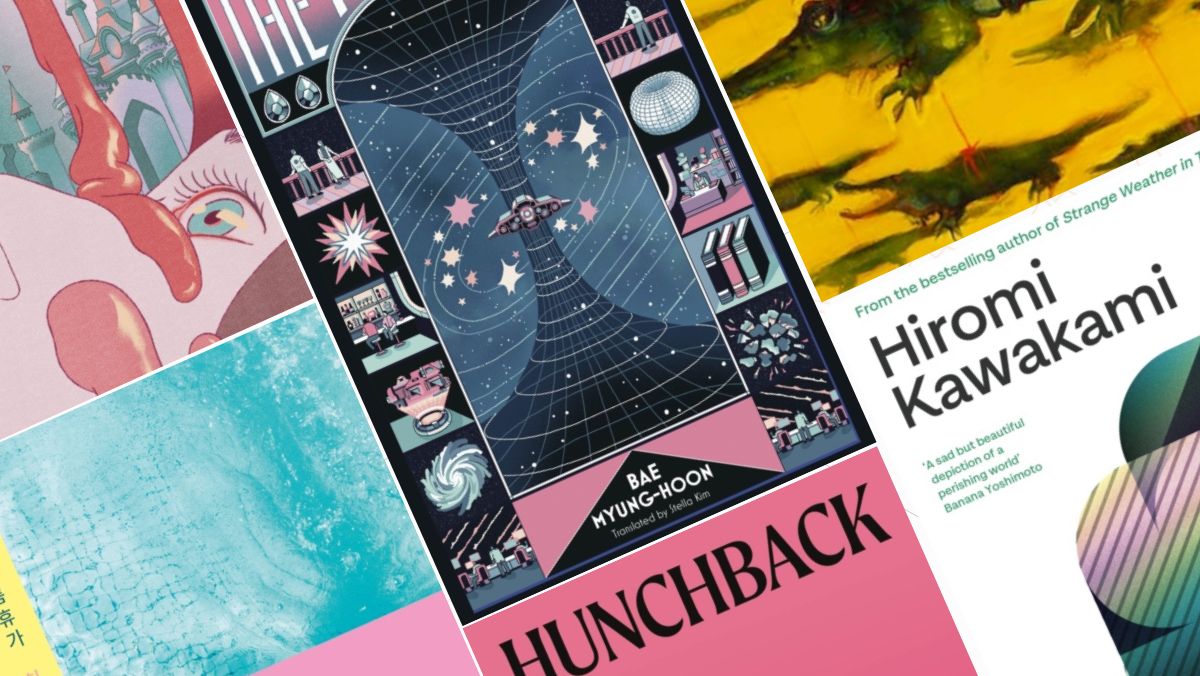
Dodging the usual Japanese heavyweights (well, mostly) in favour of more esoteric cuts, here are our favourite reads from this most rich of literary areas.
The Proposal, by Bae Myung-Hoon (translated by Stella Kim)

We’re long-time Bae Myung-Hoon fans here at Storysmith (‘Bae-Watchers’, as we’re collectively known), ever since his fantastic near-future sci-fi short story collection Tower was translated from Korean by Stella Kim and published by Honford Star a few years back.
However, if you feel slightly allergic to the “sci-fi” label, though, as I know many people are – don’t worry too much. BMH’s books are undeniably sci-fi, but they’re relatively light on the “sci-” part and more in the “soft-sci-fi” realm. The Proposal is a space opera set during an intergalactic war with a mysterious faceless enemy that a prophetic text predicted would attack on a specific future date. But the main crux of the story is based around: 1. A long-distance relationship between our protagonist, who is space-born, and an earth-born woman; and 2. the bureaucratic hijinks that ensue through space and time as humanity grapples with an unknown enemy which is so far away they can’t even shoot them properly, because by the time the “lucifer particles” reach their spaceships it’s 20 minutes later and they’re no longer in the same point in space.
Bae Myung-Hoon’s signature bizarre-comic style makes this a one-or-two sitting book that will ultimately sucker punch you with some bigger observations about the human condition. We absolutely blasted through it.
Under the Eye of the Big Bird, by Hiromi Kawakami (translated by Asa Yoneda)
When we spoke to translator Asa Yoneda, she made it completely clear that she had no idea how to describe this novel. And who are we to go against the translator?
Describing this dream-like thread of stories is extremely difficult, but perhaps a list of the elements would help: clones, species wardens who travel by hovercraft, vivisection, a dystopian view of the family unit, and the slow decline of the human race. Enticed? You should be! We found it to be unclassifiable but haunting, indecipherable yet hypnotic, a gently savage critique (or maybe celebration) of being human.
The New Seoul Park Jelly Massacre, by Cho Yeeun (translated by Yewon Jung)

Being the sensation-thirsty little book gremlins that we are, obviously we will always be attracted to a title that promises – of all things – a jelly massacre. Set it in a fictional theme park and we’re well and truly sold! We also understand that not everyone is like us, and we’re here to reassure you that this delightful Korean curio is so much more than its sensational title (and striking cover art). True enough, it does begin with a missing child in a theme park and the event that sets off the gelatinous titular incident, but the deceptive genius of the book lies in what comes next.
Zooming out from the sticky disaster of the novel’s electrifying opening, we see various perspectives on the same incident: what may have caused it, who might be most affected by it, the shadowy forces at work trying to control it. As we cycle through protagonists (including – delightfully – that of a stray cat who has made the now-abandoned theme park their home), themes of social inequality emerge, lopsided family units reach breaking point, all seemingly exhibiting a version of the same desire: to stick together, somehow. Of course, the book’s very literal response to that desire is what tips the book over into deliciously surreal territory, but it is always anchored by those very human concerns. Glibly and addictively translated into nugget-y sentences by Yewon Jung, Cho Yeeun’s hugely entertaining debut novel (there are more in her oeuvre, as-yet untranslated) is precisely as sticky as you need it to be.
Failed Summer Vacation, by Heuijung Hur (translated by Paige Aniyah Morris)

This collection of short stories exists – without sounding too pretentious – in a space just out of reach, at the limits of the legible imagination. Settings and plots are established, the reader is given something to grasp onto, and then the stories seemingly melt in the telling. In a future where humans no longer breathe oxygen, characters contemplate a return to the planet they abandoned. Members of a message board devoted to a controversial yet waning rock band react in strange ways to the death of one of the most prolific posters. A man made entirely of paper demands that everyone writes him a report, on pain of being pummelled with pieces of paper that shoot forth from his sleeves. If you do manage to gain a foothold in these elliptical tales, the rewards are plentiful: delicate human relationships, surreal imagery, sparse and declamatory prose, and a really good dog called Crocodile.
The Bridegroom Was A Dog, by Yoko Tawada (translated by Margaret Mitsutani)

The Bridegroom Was a Dog is unapologetically weird, even for Yoko Tawada. Our main character is a schoolteacher that the town at large is already pretty suspect of, escalating dramatically when a strange man moves in with her who seems to have the soul and temperament of a dog. Throw traditional storytelling logic aside for 80 brief pages and prepare for a lot of butt humour.
Notes of a Crocodile, by Qui Miaojin (translated by Bonnie Huie)

First published in Taiwan in 1994, this fast became a cult novel in both Taiwan and China, and the narrator’s nickname ‘Lazi’ to this day, is still used as slang for Lesbian. Which is to say, this was a very impactful novel-then, and indeed, now. Set in post-martial law Taiwan, it follows the coming of age of a bunch of queer misfits studying at Taiwan’s most prestigious university. It’s a decidedly avant-garde, often hard to follow novel but it is also a deeply moving account of queer friendship, first queer romance, obsession, shame and desire. The blurb labels it a ‘poignant masterpiece’ – a fairly accurate description, I reckon.
Hunchback, by Saou Ichikawa (translated by Polly Barton)

An absolute bolt of a novel. Saou Ichikawa lives with a congenital muscle disorder, as does Shaka, the main character in her debut novel. Shaka lives in a plush care home paid for by her parents, from where she narrates the minute happenings of her daily life – the dropped morsels of food that take her incredible time and effort to retrieve from the floor, the processes and maintenance associated with her mucus-clearing apparatus, and the erotic short stories she secretly writes for an online audience. But once one of her care workers admits that he knows about all her secretive online activities, their relationship inevitably changes.
Polly Barton’s spiky translation delivers endless dark entertainment from Ichikawa’s original Japanese text, so many surprising turns of flippant language and visceral shocks with such precision and brevity.
I Want to Die But I Want to Eat Tteokbokki, by Baek Sehee (translated by Anton Hur)

This curio was a runaway bestseller when it was originally published in Korea, and with its impeccable cover design in 3 colour-ways and English translation by Anton Hur (translator of Storysmith favourites such as Love in the Big City and Cursed Bunny), we were instantly intrigued.
Part memoir, part psychological study, I Want to Die But I Want to Eat Tteokbokki presents transcripts from 12 weeks of the author’s therapy sessions during a period of depression. Baek Sehee talks openly with her therapist about her anxieties, the pressure to succeed and feelings of general dissatisfaction and exhaustion involved in living in a society where you are made to reflect on your own actions constantly.
It’s hard to pinpoint why this is such a compulsive read, but the magic of the book, for us, comes from Baek Sehee’s vehement ordinariness. It’s also a rare and incredibly generous insight into a person’s unfiltered thoughts and feelings, an antidote to the polished world of the Instagram persona, and this is what makes it such a comforting and thought-provoking read (and had us googling where we could get tteokbokki in Bristol).
Human Acts, by Han Kang (translated by Deborah Smith)

Han Kang rose to prominence in the English-speaking world when The Vegetarian won the Man Booker International Prize. Whether you’ve read The Vegetarian or not (you should!), her other novels are just as brilliant and well worth your time. Human Acts follows characters connected by the aftermath of the Gwangju Uprising in 1980s South Korea. While it’d be a lie to say this isn’t at times a harrowing read, it’s also an ethereal, beautiful, measured argument for the existence of the soul and humanity’s possibility for redemption.
The Man With Compound Eyes, by Wu Ming Yi (translated by Darryl Sterk)

Many, many disparate threads (including but not limited to a semi-mythological island society called Wayo-Wayo, a floating archipelago of ocean garbage, mountain tunnel construction, traditional whaling practices, language acquisition) wind their way together to form a richly textured, superbly translated fable of climate change, Taiwanese culture and myth. Heavy dollops of narrative fiction, eco-fiction with a subtle veneer of the supernatural. Delicious!
Weasels in the Attic, by Hiroko Oyamada (translated by David Boyd)

It’s only 70 pages long but this novel is a gorgeous and tense little package – it seems whimsical on first glance but is actually strangely profound on masculinity, ageing, the passage of time. Two friends meet for dinner three times over a span of several years, and each dinner is characterised by life-changing junctures in the characters’ lives (marriage, fatherhood, weasel infestations etc). A read that lingers long after its ruthlessly efficient running time is over.
Love in the Big City, by Sang Young Park (translated by Anton Hur)

A portrait of contemporary Korean queer culture that is both celebratory and mournful, ironic and melancholy in equal measure, rendered in a narrative style that brims with personality. Our narrator ricochets between friends, conquests and boyfriends over many years. But Love in the Big City celebrates this multitude of love: platonic, romantic, sexual; idyllic and devastating. Surely destined to become a queer cult classic.
Where the Wild Ladies Are, by Aoko Matsuda (translated by Polly Barton)

Witty and melancholy in equal measure, this is a collection of interlinked short stories loosely based around traditional Japanese folktales with a contemporary, feminist twist. A few of the stories begin with a light touch of context, which is exactly the right amount of handholding: you don’t have to have read any Japanese folktales to enjoy this. These are damn good ghost stories in-and-of themselves. If anything, it just makes you want to come back for more.
Winter In Sokcho, by Elisa Shua Dusapin (translated by Aneesa Abbas Higgins)

Anyone who has endured a winter in a town that relies on summer tourism will feel an acute affinity for this wonderful and curious little novel from French-Korean writer Dusapin. We join a directionless guesthouse worker in a North Korean border town by the sea as she shares a beautifully awkward new relationship (if you can call it that) with a visiting French cartoonist. And if you’re a fan of vivid writing about fish, this one’s for you.
Cursed Bunny, by Bora Chung (translated by Anton Hur)

A collection of genre-defying Korean short stories that jump between the ridiculous and the terrifying. Dive in to find Angela Carter-style fables, body horror, ghost stories and science-fiction. One of our favourites from the last few years and graced one of our Storysmith Books of the Year lists.
Strange Beasts Of China, by Yan Getranslated by Jeremy Tiang

A deliciously and unconventional detective drama that plays out in a fictional city populated in part by the richly described beasts of the title. Each chapter relays the sad history of a different breed of beast, all while the tension in our cryptozoologist hero’s personal story threatens to topple her attempts to catalogue their behaviour.
Breasts & Eggs, by Mieko Kawakami (translated by Sam Bett & David Boyd)

We’ve been shouting about Breasts & Eggs here at the shop since it was first published in the UK. It’s one of those delightfully compulsive books that makes you want to cancel all plans and hunker down until it’s finished: frankly, we’re a bit obsessed.
The first part of the novel follows Natsu as she welcomes her older sister Makiko and her teenage niece Midoriko to her cramped Tokyo apartment. Midoriko is refusing to speak, and her silence hangs heavily over the family as Makiko obsesses about the breast enhancement surgery that she hopes will transform her ageing body. In the second part we meet Natsu again eight years later. She is working on her second novel, and grappling with the idea of motherhood in a world where she doesn’t fit into the typical mould. With engaging honesty and a dark humour, Kawakami explores objectification, self-obsession and female suffering in a book which has caused something of a stir back in the author’s home country.
It’s a rare insight into female working class lives in Japan, and we loved the frank and progressive discussions about womanhood, parenthood and, perhaps most importantly, the freedom to make up and change our minds about the big questions.
Do Not Say We Have Nothing, by Madeliene Thien

Do Not Say We Have Nothing is both a grand, beautifully realised epic, and an affecting personal tale of one woman’s journey to self-discovery. Thien covers thousands of miles and generations of family history while maintaining a tight focus on a handful of poets, musicians, lovers and revolutionaries–and she almost makes it seem easy!
Diary Of A Mad Old Man, by Junichiro Tanizaki (translated by Howard Hibbett)

Tanizaki works incredibly hard to make an at-times reprehensible main character palatable, maybe even loveable, in this troubling and exquisitely strange novel. It is literally a diary of a mad old man, Utsugi, who tells us his most intimate secrets while generally upsetting his family in creatively unpleasant ways, and embarks upon a ill-advised pursuit of his strong-willed and wily daughter-in-law.
Fifty Sounds, by Polly Barton

A memoir in fragments, translator Polly Barton uses the eponymous “fifty sounds” of Japanese as a framework with which to craft a personal onomatopoeic dictionary and reflection on her time as an outsider in a foreign country. Each sound brings forth a memory – a jumping off point for her exploration of the culture, philosophy, language, and personal transformation.