Utterly compelling real-life stories that scour the outer reaches of human behaviour, for better or worse. This list is not sponsored by Squarespace.
Premonitions Bureau, by Sam Knight

If you’re a fan of the narrative investigations of Jon Ronson, Julia Ebner and Patrick Radden Keefe, we’ve found your new favourite book. Sam Knight’s painstakingly researched and beautifully written history of a little known government department which logged reports of premonitions submitted by the general public through the 1960s and beyond hits that perfect intersection of ‘I can’t believe this happened’ and ‘it’s so ludicrous it had to happen’. Tragedies like the Aberfan disaster, plane crashes, assassinations: all predicted if you look at the premonitions from a certain angle, and Knight’s knack for relaying them sensitively, analytically and with a nose for the absurd, gives this book the dynamic feel of a well-plotted thriller.
Porn: An Oral History, by Polly Barton

With its knowingly grandiose title, Polly Barton’s remarkable project of a new book is already one of the most talked-about releases of the year (we mean nationally, not just us chattering about it incessantly in the shop). Taking the form of 19 frank and sensitively edited conversations about pornography – attitudes towards, benefits of problems with, ethics of – Barton coaxes gleaming truths from her carefully chosen interviewees thanks to her brilliant command of tone and knowing the precisely correct question to ask. It is resolutely not a comprehensive or arch history of pornography (surely this exists somewhere else), but it is an eye-opening banquet of knotty ideas presented with anxieties and humanity completely intact.
Goblinhood, by Jen Calleja

There is a ferocious energy to Jen Calleja’s collection of pop-culture-obsessed essayettes and poems which could, in lesser hands, have glossed over the meat of its subject. And when the subject is the peculiarities of embracing one’s own goblinhood, aka being a rank and indulgent little sausage, there is way more to unpack than you might think. Calleja’s breathless writing rattles through endless examples of goblinhood from movies, TV, music, art, books and whatever else, but treats them all with scrutiny, asking whether we should be valorising this strangely alluring self-categorisation.
Despite that energy and the almost scattershot approach with which she tackles her subjects, Calleja is supremely capable of weaving in poignant truths from her own life experience and goblinoid tendencies, something that elevates this book way beyond a mere collection of mordant vignettes. From Jim Henson deep-lore to Rising Damp to Liza Minnelli, all targets are beautifully chosen and discussed with openness and humour, but as a reader you’re never too far away from considering your own goblinhood and how you might best utilise it.
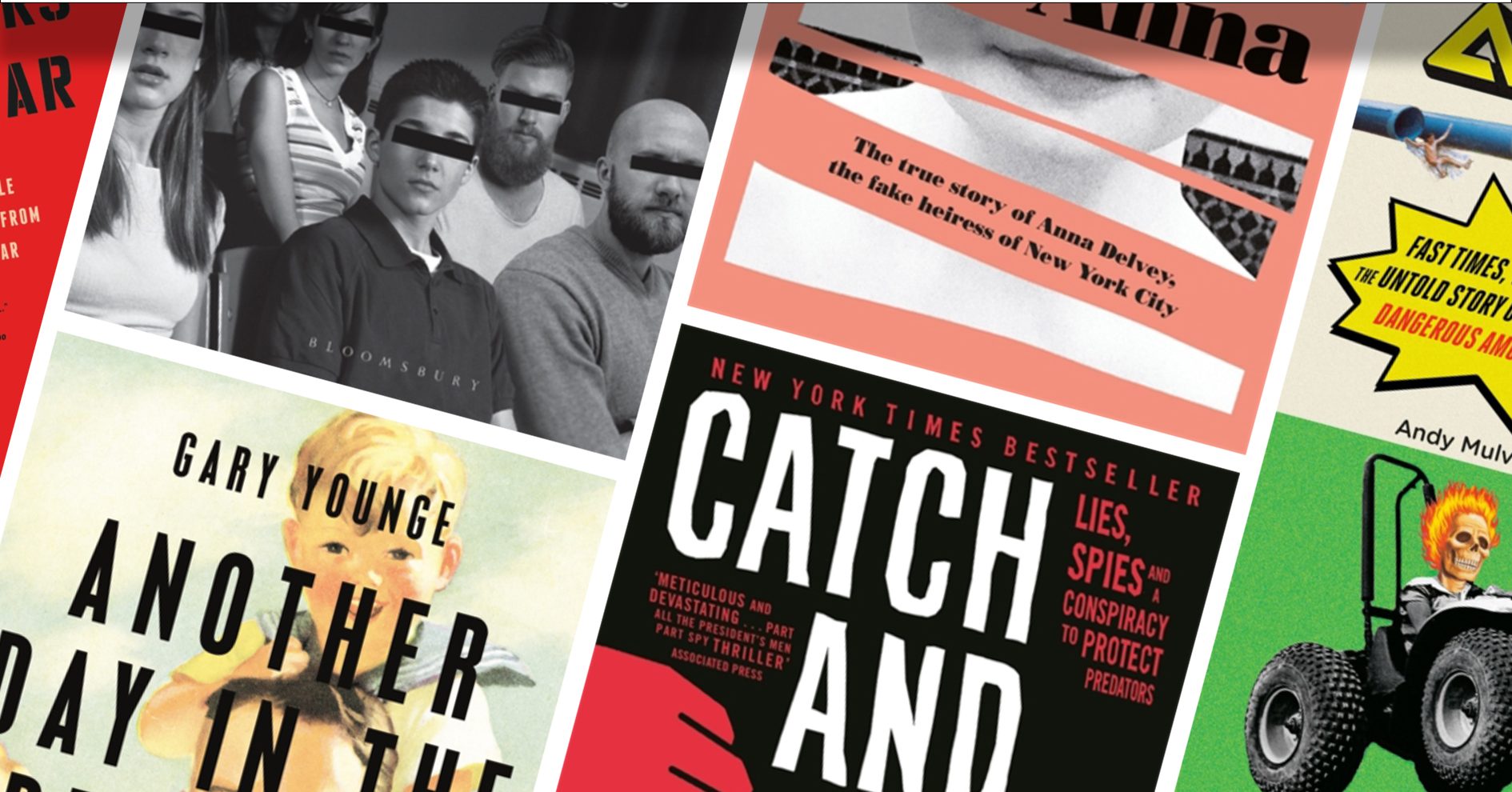
Action Park, by Andy Mulvihill

The story behind America’s least stringent theme park: a combination of horrifying safety records, insane security policies, cheap Oktoberfest booze and terrific weather.
What Artists Wear, by Charlie Porter

Seamlessly pieced together (perhaps, like a good outfit?) and obsessively researched, What Artists Wear is a singular investigation into the lives, work and wardrobes of the most interesting artists of the 20th and 21st centuries. Suits, denim, paint splatters – Porter shows us how each garment can be a performance, a mission statement, or a work of art in itself.
What Is Mine, by José Henrique Bortoluci
(translated by Rahul Bery)

What is Mine is just simply a perfect book. It’s the kind of non-fiction that blurs boundaries between memoir and history and cultural enquiry, and jumps around between past, future, tying together its themes and subjects in unexpected ways. What threads What is Mine together is a series of interviews with Didi, José’s father, who worked as a truck driver in Brazil over a tumultuous half-century of dictatorship, but who, in a lot of ways, has very little to show for it and little to no inheritance for his children: no diaries, no photos, no money or estate to pass on.
The best anecdotes include his UFO experience, how to cook roadkill on a ripping hot engine, and the other truckers he knew from a life on the road. But on a macro-scale we also witness Didi’s part in the construction of the trans-Amazonian highway, a supposedly country-unifying municipal project, with complicated colonial roots and devastating environmental consequences. What results is a nuanced and compassionate analysis of capitalism, colonialism, Brazilian history, illness, family and masculinity.
Another Day in the Death of America, by Gary Younge

Stark and utilitarian, but agonisingly beautiful: Gary Younge simply and sympathetically pays tribute to the young victims of gun violence during one single day in America.
Going Dark, by Julia Ebner

We cannot salute Julia Ebner’s journalistic gumption enough as she inveigles herself into the unsurprisingly wretched world of online extremism, from gnarly Nazi punk festivals and trad-wives to internet terrorism workshops.
Notes From An Apocalypse, by Mark O’Connell

Dryly humorous and compelling humane dispatches from the people who are trying to safeguard themselves from the end of the world, from doomsday preppers to tech billionaires buying up huge chunks of New Zealand to ride out the apocalypse in comfort.
Afropean, by Johny Pitts

Afropean begins with a seemingly uncontroversial idea: that European history and white history are not synonymous; that being European does not mean being white.
Easy enough to say (though not for everyone) — harder to embody, to relearn, to redefine. Historical misconceptions of what European identity means are rife in our cultural imagination, mostly because history is as much about how we view ourselves and each other as it is about documenting the facts.
When Sheffield native Johny Pitts comes across the term ‘Afropean’, he’s struck by it in particular because it is “whole and unhyphenated.” But he discovers that when a word comes into being, it quickly becomes a way of pigeon-holing an idea. In an attempt to create a broad definition of Afropean identity, Pitts backpacks around Europe on a shoestring budget, talking to influencers and intellectuals, visiting museums and art galleries, but also visiting housing estates, slums and the Calais ‘Jungle’, talking to protestors, refugees and the homeless.
Afropean is an accessible travelogue which seamlessly blends memoir and political history, moving from James Baldwin and Paul Robeson to Northern Soul and Zap Mama.
The Zookeepers’ War, by J.W. Mohnhaupt

Eye-widening history of the power struggle between the major zoos in East and West Germany as they sought to outdo one another. Reads like a Cold War thriller, but with an elephant wedged into a train carriage.
My Friend Anna, by Rachel DeLoache Williams

The heart-botheringly tense story of Anna Delvey, the conwoman who turned the better nature of countless friends and acquaintances to her quite unbelievable advantage. Feel your cheeks redden with embarrassment and disbelief in real time!
Catch and Kill, by Ronan Farrow

Reads like a spy thriller, but it’s painfully, painfully true: Ronan Farrow’s determined pursuit of Harvery Weinstein makes for some brutal and uncomfortable conclusions about the power of celebrity and the complicity of those around it.