In our minds the sign of a truly great memoir is simply thus: you don’t need to have heard of the subject to relish the read. Thumb through this list for some authors of greater and lesser notoriety, but none at all lacking in literary greatness.
Alphabetical Diaries, by Sheila Heti

Arranging more than 10 years of the author’s journals alphabetically (A-Z by sentence starter), Alphabetical Diaries tells the story of a life without the usual constraints of chronology or plot. Instead, Heti arranges her life through the arbitrary order of the Alphabet.
Despite this supposed lack of plot structure, patterns still emerge, names reappear, and storylines resurface. As a reader, you’re forced to slow down, to appreciate each sentence for its subtle wisdom, its dry humour, or its hypocrisy. As sentences build, as Heti’s voice becomes more familiar, a life emerges around us – it’s obsessions, it’s calamities, it’s absurdities.
As past, present, and future are mixed together, this new alphabetical structure brilliantly compresses the mundane with the extraordinary, the funny with the heartbreaking. Befittingly, and in a very ‘Heti-esque’ fashion, Alphabetical Diaries is also full of musings on art, writing, and literature. As a collection of what makes a life meaningful, or what is meaningful in a life, Alphabetical diaries is a brilliant assemblage of to-do-lists, life events, and profound, even philosophical musings spanning almost 20 years of Heti’s life.
Swimming Studies, by Leanne Shapton

Leanne Shapton’s Swimming Studies has been one of my all-time favourites since I first read it back in my early bookselling days (in 2016? Oh jeez) but it has frustratingly been out of print in the UK for quite a while now. No longer! Daunt Books have saved the day with this gorgeous new edition which means I can finally recommend it again without having to loan out my totally battered copy. Plus an intro from my fave, Rita Bullwinkel. What else do you need!
Those who know Leanne Shapton’s work will probably know her through her art, and probably won’t know (unless you’ve already read the book) that growing up in Canada she was one of the best swimmers in the country, making it all the way to Olympic trials. Swimming Studies is about this experience, but it’s also a springboard (sorry) that launches the reader into unexpected places, confounding preconceived ideas of what swimming is in a way that’s super personal and yet expansive.
And like all the best books about a hyper-specific subject-matter, it manages to be a book for both enthusiasts, as well as readers with little-to-no prior knowledge (like me). This is in part because through the magic, concentrated focus that all good books have. That it makes you obsessed with swimming, art-making, ritual and obsession itself while between the pages (and likely far beyond). But it’s also because of its fluid formal brilliance: the way the different memories layer on top of each other to create a rich, full, immersive feeling; the sections that feel like an art installation of paintings, catalogues of swim suits, visual interpretation of very specific smells; and how all these things come together to create a book that doesn’t feel fractured but instead smooth and indivisible.
The Long-winded Lady, by Maeve Brennan

Originally published in The New Yorker, this collection of ‘micro essays’ detail the quotidian of 1950s and 1960s New York City. From the side-lines, Brennan oversees and overhears the city’s denizens. She scrutinises particular individuals, brilliantly (and often critically) detailing their character with a painterly precision. Beyond these intricate observations, Brennan begins to paint a larger picture, verging on almost philosophical musings. But she never lays these down on the page. Far from being didactic, her essays are fleeting documentations of a city’s day to day, meandering between its highs and lows, its excitement and melancholy.
A Flat Place, by Noreen Masud

Narrative plot is often likened to a mountain, with a rise and fall, a central drama and resolution; yet, the narrative of Noreen Masud’s A Flat Place centres on the banality of the flat landscape, a landscape that seemingly refutes an easy plot or structure. It is through this ‘nowhere’ place that Masud is best able to relate the story of her childhood and cPTSD: the numbing expanse of flat landscapes best reflects Masud’s own narrative past and emotional ‘flatness’. Though helping Masud come to terms with her cPTSD, the flat landscape also resists the cliche of a ‘nature cure’; it is not a landscape of easy resolution or remedy, but of an ongoing process and acceptance.
Stay True, by Hua Hsu

This Pulitzer-winning memoir focuses on the college years of aimless music obsessive Hua Hsu, wrestling with how best to present himself to the world as a second-generation Taiwanese-American who also happens to be preoccupied with pop culture minutiae, zines, the supremacy of his alternative music taste, and hating Pearl Jam.
At this seemingly unremarkable time in his life, he builds a friendship with Ken, a fellow student who forces Hsu to reconsider his own attitudes to authenticity, relayed in simple but aching prose that neatly sidesteps nostalgia at all times. This gentle narrative is upset by a tragedy, however, and that’s when the book dissolves and rearranges itself as something else, something strangely hopeful in the face of immense sadness. Beautiful, compulsive reading.
What is Mine, by Jose Henrique Bortoluci (translated by Rahul Bery)

What is Mine is a series of interviews with Didi, José’s father, who worked as a truck driver in Brazil over a tumultuous half-century of dictatorship, but who, in a lot of ways, has very little to show for it and little to no inheritance for his children: no diaries, no photos, no money or estate to pass on. The best anecdotes include his UFO experience, how to cook roadkill on a ripping hot engine, and the other truckers he knew from a life on the road. But on a macro-scale we also witness Didi’s part in the construction of the trans-Amazonian highway, a supposedly country-unifying municipal project, with complicated colonial roots and devastating environmental consequences. What results is a nuanced and compassionate analysis of capitalism, colonialism, Brazilian history, illness, family and masculinity.
Days in the Caucasus, by Banine
(translated by Anne Thompson-Ahmadova)

Rich and vivid and slightly salacious, this is the brilliantly detailed and witty account of a youth spent in the mountain ranges of Azerbaijan from someone who was there, who fell from wealth to poverty, and straddled warzones in her formative years. Totally scintillating.
The Copenhagen Trilogy, by Tove Ditlevsen (translated by Tiina Nunnally & Michael Favala Goldman)

Each slim volume of these addictive chronicles has its own charms and foibles, and through Childhood, Youth and Dependency we are alternately amused, shocked, delighted and saddened by the remarkable life of one of Denmark’s foremost literary figures.
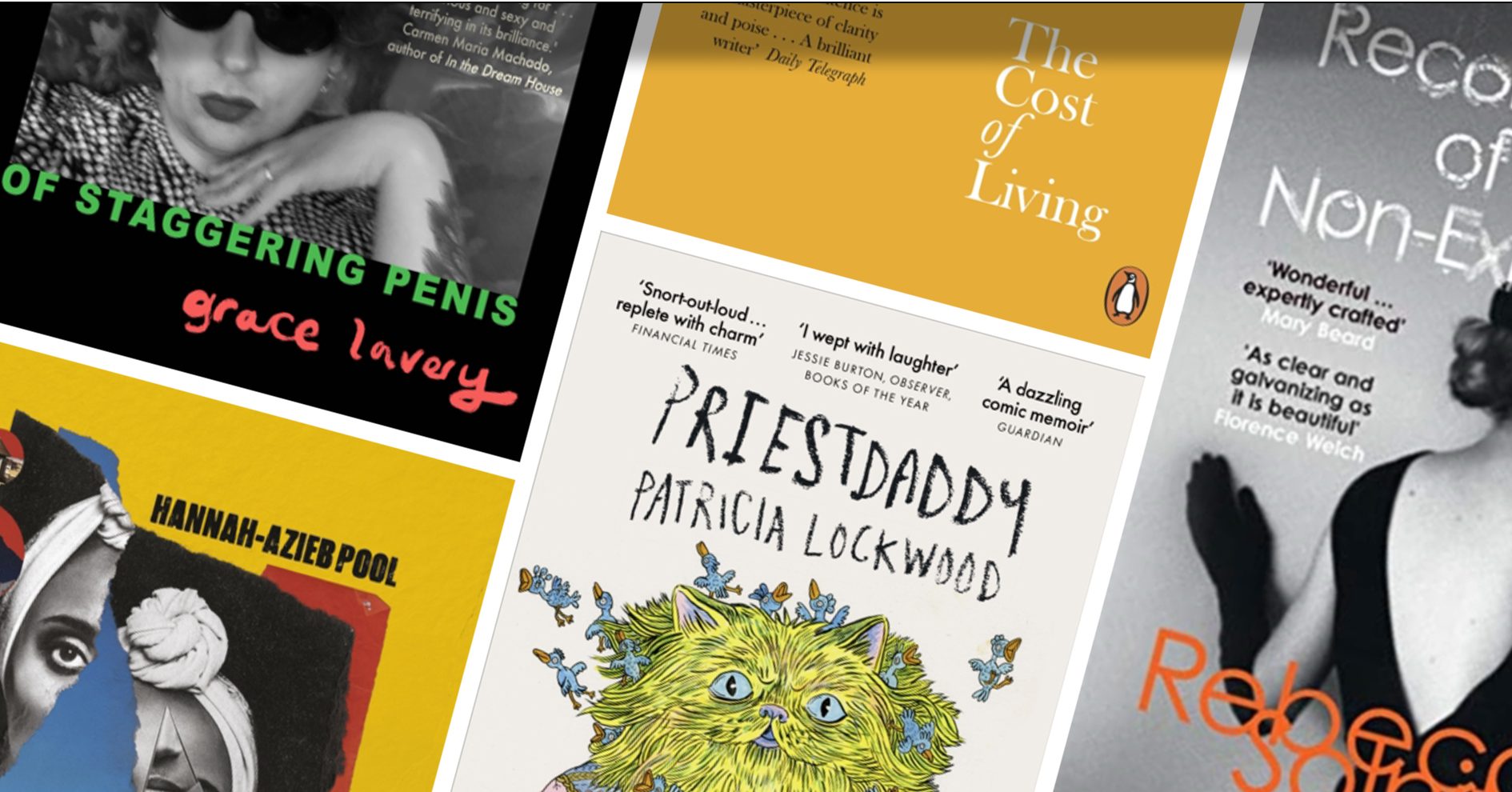
My Fathers’ Daughter, by Hannah-Azieb Pool

This is an incredible memoir of lost and reconnected families, told with such clarity and warmth that it can be easy to forget just how momentous the story itself is. When Hannah-Azieb Pool discovers that the Eritrean family she never thought she’d meet desperately wants to see her, she decides to travel across the world to a community and culture remotely distant from her own comparatively comfortable, even affluent adoptive UK upbringing.
The interactions are charged and intense, knotty and difficult to process, but Pool’s prose is so engagingly approachable that these deeply complex events are made eminently readable, spinning the history of an area of immense geopolitical strife seamlessly alongside the more immediate and emotionally raw family drama.
Crying in H Mart, by Michelle Zauner

“Ever since my mom died, I cry in H Mart.” Perhaps one of those great opening lines that will be taught in creative writing courses in years to come? Michelle Zauner is best known as the frontwoman of Japanese Breakfast. But you don’t have to be familiar with her music. This is just a brilliant memoir about grief, identity, and Korean food from an exceptional new literary voice. Also, prepare to be extremely hungry.
The Years, by Annie Ernaux (Translated by Alison L Strayer)

There is, in our opinion, only one suitable to describe this- a masterpiece. Of Ernaux’s multiple works, this is widely considered to be her most defining and important work. It’s an entirely new genre, a kind of ‘collective memoir’ of the years from 1941-2006 refracted through the life of Ernaux. A phenomenal evocation of times now past.
Priestdaddy, by Patricia Lockwood

Patricia Lockwood is a truly singular writer. Her ability to jump between the (genuinely) laugh-out-loud and the deeply profound without breaking her stride is second to none. Priestdaddy is, at its heart, an honest depiction of a difficult childhood (with a guitar-riffing, perennially underdressed, Catholic Priest as a father) and the increasingly relatable experience of loving a family who live within a different political and cultural reality than your own.
Life Among the Savages, by Shirley Jackson

The undisputed don of gothic horror fiction might not be the most obvious writer of domestic memoir, but you won’t be surprised to learn that there is a subtle but distinct edge to Shirley Jackson’s recounting of her life as a young mother to her unruly (but completely charming) children and her largely ineffective husband. Gliding beneath the comic set pieces is the very definite sense that Jackson is refusing to accept the expectations placed upon her as a 1950s housewife, and the tension is delicious.
Recollections of My Non-Existence, by Rebecca Solnit

We almost certainly don’t need to introduce you to Rebecca Solnit. But despite her incredibly prolific writing career (everything from the broadly political to the hyper-specific), this is pretty much her first memoir. You’ll come away from this book with an even longer reading list, a renewed creative drive, and a longing for that perfect, once in-a-lifetime writing desk.
The Breaks, by Julietta Singh

A determinedly-hopeful powerhouse of a book. Much in the vein of Maggie Nelson, James Baldwin and Ta-Nehisi Coates, Julietta Singh’s The Breaks is as much a letter to her daughter as it is a manifesto for radical pedagogy, queer family-making, and utopian thinking. This is the kind of book you read and then find yourself buying for everyone you know.
Thin Places, by Kerri ní Dochartaigh

While nature writing has seen a remarkable increase in popularity of late in England, the subject of Northern Ireland and the legacy of the Troubles remains underdiscussed and underacknowledged. In Thin Places, Kerrí Ní Dochartaigh fuses both of these themes, vividly describing her childhood growing up in a mixed-religion family in Derry at the height of the Troubles in, and the trauma her years of youth have left her with- trauma which she has been aided in addressing by the healing power of nature.
The Cost of Living, by Deborah levy

Possibly the greatest depiction of mid-life ennui that we’ve come across, the second instalment in Levy’s ongoing autobiographical series is full of comic sadness and existential contemplation, but told with brilliant economy and savage detail.
Please Miss: A Heartbreaking Work of Staggering Penis, by Grace Lavery

This is as totally brilliant and whack as the title. It’s difficult to say much for fear of spoiling the raucous ride this will take you on, but suffice to say it is brilliant, intellectual and fun. It will make you think in ways you had not before, and laugh out loud.