Here’s a list for the miniaturists, the knick-knack lovers, and the car-boot sale trawlers. These books relish in life’s little, mundane things. From brass door handles, glass lampshades, and the specificities of an instant-noodle packet, they dote on everyday objects with a renewed interest and care. They might inspire you to look at the everyday differently, or just baffle you with how many adjectives you could use to describe an egg, we don’t mind – we just think they’re worth a read!
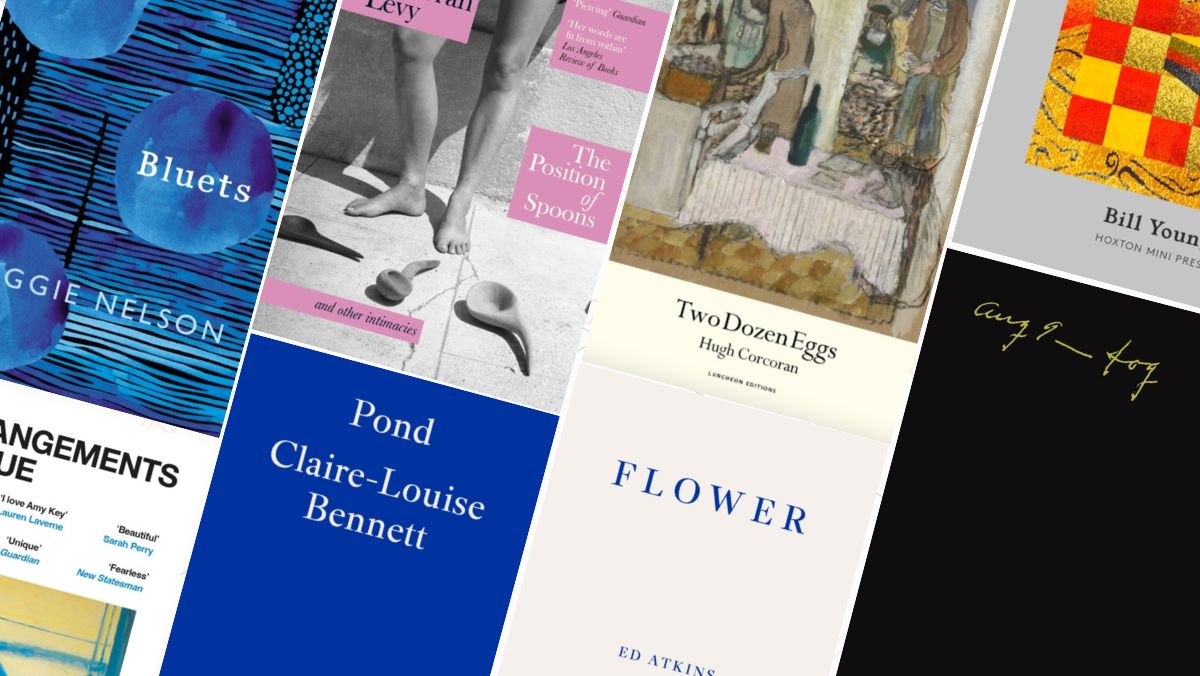
Pond, by Claire-Louise Bennett

This collection of short stories, all seemingly written by the same nameless female narrator, follows a mind in motion. Retreating to a quiet coastal town, the narrator retreats into her own private world, charting all the material, the matter, and the stuff, that make up her new, unassuming surroundings. At once strange, funny, and provocative, this collection reenchants the everyday, enriching the solitary life the narrator lives. One story, simply called ‘Oh Puree’, is a sort of ode to tomato puree, relishing in this store-cupboard staple and cherishing its ‘kitsch and concentrated splendor’. In fact, throughout, these everyday minutia takes on their own luminous quality, making even the most mundane things art in their own right.
Pure Colour, by Shelia Heti

On a plot level, Pure Colour is a story about a woman named Mira, her infatuation with her class-mate Annie, and her intense grief over the loss of her father. It’s a rite-of-passage, coming-of-age tale, following a young woman facing momentous emotional upheaval. But it’s also much more than that… or much weirder than that. This book takes a nose-dive into the abstract, spending most of its time inside a leaf. It’s this strange slanted view of the world that makes this book so beautiful; everything is looked at with a fresh perspective, worthy of a detailed, intricate description. In crisp and cunning prose Shelia Heti shifts your entire perspective in beautifully and eternally strange ways.
Aug, 9-Fog, by Kathryn Scanlon

This book is the result of a reductionist aesthetic. From a diary that was half-lost, crumbling when opened, Katherine Scanlan collects rescuable fragments. From the intelligible entries and incomplete sentences she composes this spare and sharp little book. These are flickering glimpses into a life, elegies of its minutiae: tomatoes are canned, flowers are delivered, tombstones are bought. And from these minutiae, a kind of testimony emerges: a testimony for the magic of all of our small, fleeting existences and how we choose to mark them.
The Position of Spoons & Other Intimacies, by Deborah Levy

Anyone familiar with Levy’s exquisitely angst-plagued fiction writing will be thrilled to note that the seeds for that work are on display across these micro-essays, thought experiments and dissections of her cultural heroines.
For all the frost that covers her work, Levy’s key calculation is to periodically allow us a glimpse of warmth, of human oddness and tenderness. It all feels so effortless and pleasurable, but it sacrifices nothing in the way of complexity or spikiness, the type of indulgence that doesn’t feel at all sickly and, therefore, can be consumed guilt-free.
What Artists Wear, by Charlie Porter

Seamlessly pieced together (like a well curated outfit?) and obsessively researched, What Artists Wear is a singular investigation into the lives, work and wardrobes of the most interesting artists of the 20th and 21st centuries. Suits, denim, paint splatters – Porter shows us how each garment can be a performance, a mission statement, or a work of art in itself.
Bluets, by Maggie Nelson

In Bluets, Maggie Nelson describes with a characterful frankness her own intimate relationship with the colour blue, reliving blue-tinged memories of sex with old lovers in seedy hotels, the first sighting of the ocean after a long drive, the bruised skin of a friend with paraplegia.
Divided into 240 numbered ‘propositions’, as Nelson calls these funny little prose poems, Bluets is both expansive yet abstract in its dissection of blue; Nelson, though enamoured with the colour, is undecided on its purpose, and unsure of the feelings it provokes (how can one colour elicit both hope and despair?). She draws upon the meditations of philosophers, artists, saints, who are similarly fascinated by the spectacle of colour, its vastness and its limitations. Nelson, so mystified by this colour, can only concede that ‘if blue is anything on this earth, it is abundant’.
I Remember, by Joe Brainard

I Remember is a deceptively simple concept for a memoir, if that’s even the right definition: to simply write down memories as they come to mind, starting each sentence “I remember …”. Surely that’s been done before? Nope! This is the original one!
Back with a delightful new reprint courtesy of Daunt books, Joe Brainard’s experimental 1970 “memoir” (art piece, recollections, stream of consciousness…) now comes with an introduction from Storysmith fave Olivia Laing, who’s been reliably introducing the UK to queer cult classics for some time now, which gives some background info about Brainard.
But honestly, the book is just terrific and doesn’t really need much context. It’s enjoyable in and of itself (in a way that utterly contradicts its status as “art piece”), and it’s kind of miraculous how the whole thing holds together. Mixing everyday childish memories (“I remember pop beads…. I remember spam… I remember Liberace…”) with mid-century nostalgia, a coming-of-age story in micro-bursts. Funny, confessional, and genuinely original.
Two Dozen Eggs, by Hugh Corcoran

Hopping between Dublin, Bordeaux, Rome, and County Down, these short stories each give a charming snapshot of a life, each told through the minutiae of food. Though often under 5 pages, each story brims with everyday detail and character, offering glimpses of dinner tables and mealtimes. From the nostalgia of a boiled egg, the romance of tuna conserve, or a work break shared over Ttoro fish stew, every story collects around food and the shared consolation it brings. Food, plentiful or scarce, simple or complex, eaten alone or together, is wholeheartedly celebrated here.
The Long-Winded Lady, by Maeve Brennan

Originally published in The New Yorker, this collection of ‘micro essays’ detail the quotidian of 1950s and 1960s New York City. From the side-lines, Brennan oversees and overhears the city’s denizens. She scrutinises particular individuals, brilliantly (and often critically) detailing their character with a painterly precision. Beyond these intricate observations, Brennan begins to paint a larger picture, verging on almost philosophical musings. But she never lays these down on the page. Far from being didactic, her essays are fleeting documentations of a city’s day to day, meandering between its highs and lows, its excitement and melancholy.
Flower, by Ed Atkins

Beginning with an incredibly vivid breakdown of the merits/drawbacks of the various pre-packaged sandwich wraps available in the author’s local pharmacy in Berlin, this is a totally breathless stream-of-consciousness braindump that is as much about the restless state of an artistic mind as it is an uproarious celebration of minutiae. Atkins is an established and innovative voice in contemporary art known chiefly for his meticulously edited video pieces, and as such it is exhilarating to see him so unbidden on the page. Meditations on his relationship with his young children melt into extended and fantastical jags on imagining himself as a cybernetic robot, all with barely a paragraph break across its 90-or-so pages, the result being a truly brilliant mess.
Pleasure Beach, by Helen Palmer

Pleasure Beach is a synesthetic delight, layering the magical and mundane, the messy with the sublime, and the plights of teenage love with the delights of a 99 Flake. Set in the seaside resort Blackpool over one day, the 16th June 1999, Pleasure Beach plunges us into a 90s panorama: a world of neon Fanta, Nokia 3200s, and TLC’s Waterfalls. We follow the love story of teenagers Rachel and Olga, and a third interlocutor, Treesa. In swirling, stream-of-consciousness prose, each of our protagonist’s thoughts fade in and out, giving a chorus-like hum to the text. Such stylistic fluidity entwines the minutiae of each character’s thoughts, interweaving the comical and trivial with the deeply personal and emotive.
Helen Palmer takes delight in her descriptions, detailing everything in a playful and synesthetic panoply. Blackpool is brought to life in a panorama of sensory experiences: from chip shop grease to an alcopop’s neon effervescence, everything is described with an intense, kaleidoscopic brilliance.
Arrangements in Blue, by Amy Key

As a sucker for both writings on love and Joni Mitchell, Amy Key’s Arrangements in Blue couldn’t be further up my street.
Using Mitchell’s seminal album Blue as a blueprint (pun absolutely intended) for her musings, Key speaks eloquently of the search for a romantic life in absence of a partner. What begins as a recollection of lost and failed loves soon becomes a recalibration of selfhood, as Key questions the preconceived notions of romance she absorbed as a teenager.
This memoir is as much about the music as it is about love: Key is a poet, and so her words imitate the rhythm and expressivity found in the songs from Blue. I found this book deeply moving, and while feelings of melancholy linger throughout, there’s also a warmth that emanates from Key’s descriptions of her beautifully-decorated flat and the kindness of her friends.
I could drink a case of Arrangements in Blue, and if you’re a fan of stunning words and landmark folk albums, this could be the one for you.
Nina Simone’s Gum, by Warren Ellis

Regardless of your areas of specific interest, we are confident this sumptuously produced and evocatively realised curio will appeal to anyone with a soft spot for smashed violins, tales of rock excess, exploratory beards, and high-quality photography on high-quality paper stock.
It begins in 1999, when violinist Warren Ellis jumps onto the stage at Royal Festival Hall after a triumphant, defiant set from Dr Nina Simone and swipes the half-masticated chewing gum she slammed onto the piano. His book then tells us what happened to this hallowed item in the following 20 years, and also wends beautifully through Ellis’ life as an elemental musician. This is no potted history of Dr Simone’s incredible career – it’s an esoteric, dogged and delightful romp that feels like a rummage through Ellis’ turned-out pockets.
Hotel Carpets, by Bill Young

Not sure we need to explain this book to you. It’s a book of hotel carpets. Some absolute bangers in here.