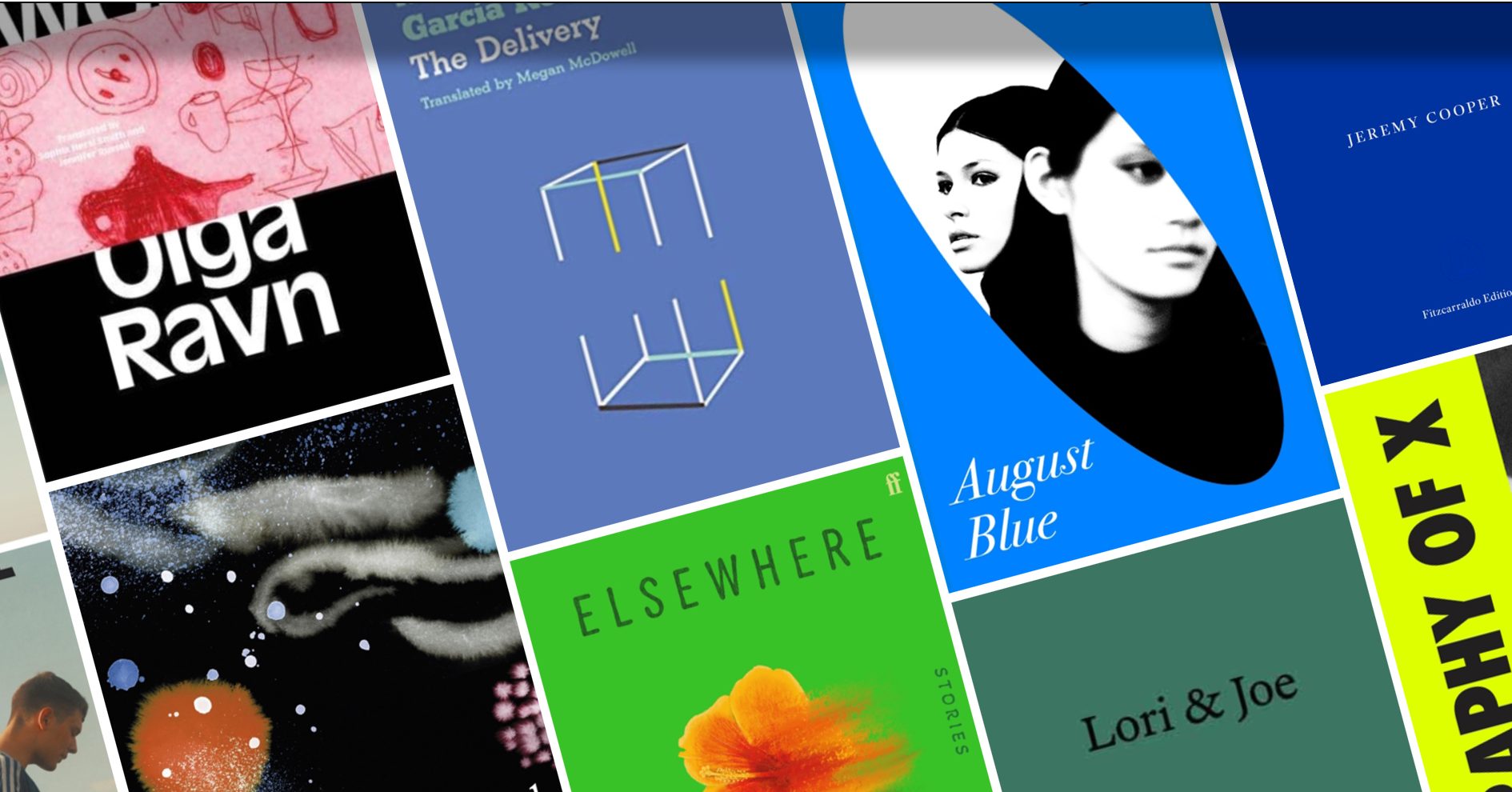
It’s that time again! Discard your literary supplements and algorithmically determined end-of-year lists, this is the only all-killer-no-filler compendium of literary excellence you need this year, compiled lovingly by our booksellers.
Each bookseller had a strict maximum of 5 favourite books, and we’ve put it all in a great big list and got them to explain WITH DETAIL why each book deserves to be on the list. There is, as always, a small amount of overlap and a tentative frontrunner for official Book Of The Year – we put that one on top.
Biography of X, by Catherine Lacey

Any attempt to sum up Biography Of X in a pithy manner will only get us into trouble, but let’s give it a go? A fictional biography of a fictional artist, written by the fictional artist’s actual partner, all presented as a hermetically self-contained non-fiction document, but one that takes place in an alternative-history version of the United States and weaves in and out of history as WE understand it by employing a revolving cast of pop culture figures who ghost in and out of the story (including: David Bowie! Brian Eno! Connie Converse!). It’s also possibly the most beautifully written, ambitiously staged and emotionally gutting book of the year, which is all the more ridiculous considering the gargantuan scope of the novel. This is as much a chronicle of a world that almost existed as much as it is a prodding of the entire genre of biography, its ethical and moral ickiness. An absolutely monolithic expression of a singular vision which we cannot recommend highly enough.
Chosen by Emily, Siúbhan and Dan
Lori & Joe, by Amy Arnold

Lori & Joe is a book that seemingly centres on the mundane: a woman on a morning walk through the Lake Distict’s fells. Yet the novel’s rambling prose hides a stratigraphy of trauma, grief, and melancholy – it’s clear from the very outset that Joe has passed away, and Lori reacts by simply going for her morning walk. As she climbs, her spiralling thoughts reflect on years of marriage, childlessness and isolation. Like the rolling valleys of hills of the landscape around her, the novel’s run-on meandering sentences carry us through the mundane and the shocking, plunging us into something tumultuous and mysterious.
Set over the course of a single day, this petite but powerful novel has a completely captivating style and language all of its own, and appropriately enough for a novel somewhat about emotional inertia you may well read the whole thing with your heart in your mouth. A true experience to read, Amy Arnold takes us on a walk where the threat of danger lurks in the thick fog of the fells, and in the corners of the entrapped female mind.
Chosen by Emily & Holly
Tremor, by Teju Cole

There’s a point in the very middle of Tremor where the main character, Tunde, delivers an entire keynote address. The lecture itself is absolutely dazzling and as a stand-alone set-piece means it literally had to be on the BOTY list, but what happens at the very end of that section, something that snaps you back into the real world of the novel, is one of the most brilliant single moments in a novel I can remember experiencing. The rest of it is pretty peerless stuff – a deeply reflective and melancholy campus novel about an academic whose marriage is ambiently not-quite-right, which morphs into a cacophonous, polyphonous exploration of what it means to attempt a meaningful life when deeply dislocated from home.
Chosen by Dan & Siúbhan
A Flat Place, by Noreen Masud

Narrative plot is often likened to ‘a mountain’, with a rise and fall, a central drama and resolution; yet, the narrative of Noreen Masud’s A Flat Place centres on the banality of the flat landscape, a landscape that seemingly refutes any easy plot or structure. It is through this ‘nowhere’ place that Masud is best able to relate the story of her childhood and cPTSD: the numbing expanse of flat landscapes best reflects Masud’s own narrative past and emotional ‘flatness’. Though helping Masud come to terms with her cPTSD, the flat landscape also resists the cliche of a ‘nature cure’; it is not a landscape of easy resolution or remedy, but of an ongoing process and acceptance. As a new work of nature writing and memoir, A Flat Place reflects on a deep engagement with place, be it through purposiveness, trauma or joy.
Chosen by Holly
August Blue, by Deborah Levy

A new Deborah Levy publication is always a cause for celebration, and August Blue is a book to be truly savoured. Elsa Anderson, an international concert pianist and former child prodigy, has frozen part way through a prestigious recital. We meet her in the aftermath of this, and as she travels around Europe processing the effects of her failure, she stumbles again and again across an elusive and strangely familiar woman. This novel, like Levy’s other fiction titles, has a beautifully dreamlike tone, and an irresistible eeriness. Deborah Levy is able to capture an atmosphere like no-one else, whilst also portraying fully rounded characters that live and breathe off the page; we don’t know how she does it, but she is a complete master of her art.
Chosen by Emily
Brian, by Jeremy Cooper

Brian follows the gentle day to day of a BFI regular called (believe it or not) Brian. Struggling to find a place or any feelings of belonging, Brian turns to nightly trips to the cinema. Becoming a part of his carefully crafted daily routine, Brian also finds new community alongside his fellow film buffs. Through a genuinely heartwarming and subtly humorous plot we learn to truly care for Brian and his particular, considered habits. Alongside the narrative, Cooper also gives us considered moments of film criticism, that both stand alone, and add to richness and fulfilment Brian gets from his love of the cinema. Both an appraisal of art, and the wider community it fosters, ‘Brian’ is a spellbinding read.
Chosen by Holly
Close To Home, by Michael Magee

I still can’t believe this is Magee’s debut novel. It’s too good. Close to Home is a tender, thoughtful and vivid portrait of working-class Belfast, an astute fictional rendering of masculinity and generational trauma, and a timely examination of the disillusionment and disenfranchisement of an entire generation in “Post Good Friday Agreement” Belfast. Every person and relationship is so closely and carefully drawn – I still think about the characters within often.
Chosen by Siúbhan
Corey Fah Does Social Mobility, by Isabel Waidner

If you’ve read any of Isabel Waidner’s award-winning backlist then you will have some degree of preparation for the riches and delights in their fourth novel, but if this is your first [spiritual guide voice] ‘experience’ of their work you will encounter some of the following in Corey Fah:
- a level of sentence construction that simultaneously breaks, fixes and improves many conventional notions of syntax
- insect proboscis Bambi
- apocalyptic reality tv broadcast from a dilapidated footie stadium
- hearty critique of awards culture and the personal endeavour we associate with creativity
- a narrative that champions fellowship and companionship and gently dismantles capitalist ideas of culture and commercialism in favour of hope and fraternity
It is a reading experience like nothing else, surprisingly plotty, rendered all the more incredible because it came out via a big multinational conventional publisher (albeit one of the weirder divisions) – Waidner’s journey from cottage-industry publishing houses to the gleaming-office big leagues is one of the most heartening developments in literature this year. The fact that this is their second appearance on our BOTY list in as many years also means they are unfortunately tied to us forever by virtue of their brilliance, we don’t make the rules.
Chosen by Dan
Elsewhere, by Yan Ge

Elsewhere is undeniably one of our books of the year, but also was the subject of one of our in store events of the year. We were lucky enough to host Yan Ge for a conversation with translator Polly Barton focusing on Elsewhere as well as language, the short story as a form, dislocation, the relationship between writer and reader. If you know, you know. She’s the real deal.
Yan Ge’s first English language collection makes for such unexpectedly perfect juxtapositions: intimate and observational character stories set in modern day Dublin and Stockholm; sweeping and meticulous political intrigues in medieval China; the sharply realist and the semi-ethereal. This might sound a bit whip-lash inducing, but Elsewhere is a masterfully consistent collection of stories about language, belonging and estrangement – and features the only story we’ve ever read that so heavily revolves around using a breast pump. (Seriously, it’s so brilliant).
Is there any other writer who can jump from their native language (and genres, times, places) and retain their authorial voice? And how has she managed it?
Chosen by Callum
Kick the Latch, by Kathryn Scanlan

Sometimes in our reading journey the most valuable thing you can do is step into the life of someone you never even considered. That’s exactly what I thought when I approached this unusual but deeply profound novel from Kathryn Scanlan – meticulously and seamlessly woven together and reassembled from a series of conversations between the author and horse trainer named Sonia, who becomes our trusted guide in the arcane and physical world of her work. Hoof care, training regimes, equine health: it’s all in there, it all sounds prosaic, but it will become in your mind as sacred as it is to our narrator.
We are with Sonia right at the side of the racetrack in beautifully concise chapters that form a portrait of a life lived in service to something larger. Lines that seem slapdash and spat out contain sometimes unbearable, barely-disguised heartache. Reading those lines twice is often irresistible. Effortless to devour and gently enveloping with its dawn groomings, the bleak landscapes and travelling circus of the horseracing circuit makes for surprisingly propulsive storytelling, and though there are moments of bleakness, the ultimate effect is to be transported into that elusive other life.
Chosen by Dan
My Work, by Olga Ravn (Sophia Hersi Smith & Jennifer Russell)

Oh man, this is a masterpiece. The kind of book that cracks you open – at least it did me. Left me a hollow shell! In My Work (I wish it was ‘my work’), Olga Ravn blends various forms: fiction, memoir, poetry, letters, essay to explore gestation, birth and motherhood. It’s a dizzying novel, yet somehow carries the reader along easily-occasionally halted by the sucker-punches it throws. I think about it all the time.
Chosen by Siúbhan
No Love Lost, by Rachel Ingalls

You may have heard us banging on about Mrs Caliban for the last like… three years? An absolutely perfect novella that has long been lost to obscurity. Read that if you haven’t already, but then dive into this spectacular anthology of some of Rachel Ingall’s best stories and novellas which have also, like all her work, fallen into obscurity. Few stretch longer than 100 pages, all are clearly the work of a genius and, in the best way, a weirdo. The first of these novellas follows a monk who, after a visitation and sexual liaison with the angel Gabriel, starts metamorphosing into a pregnant woman, much to the bamboozlement of the monastic authorities. Need I say more? That’s the kind of thing you’re in for. But what makes Ingalls work truly transcendent is how these strange stories veer effortlessly into the realm of the profound. This collection was reprinted this year by Faber so, according to the Storysmith Elders, does technically count.
Faber, if you’re reading this, please reprint the rest of Ingalls’ work. Please. For me.
Chosen by Callum
Open Up, by Thomas Morris

Most writers are trying to really crack open the skulls of their characters and make you sit inside them for a while. The lucky ones just about manage it and even that is stupidly impressive, but Thomas Morris has properly cracked it here. Open Up is five profound, deeply affecting, and tightly written short stories. Realist, for the most part, with just the right amount of reality-bending shenanigans – veering into the slightly surreal in order to express something psychologically and emotionally true about our characters’ inner lives, the human condition, the nature of the soul… all the good stuff!
Chosen by Callum
Orbital, by Samantha Harvey

This is a last minute but well-deserved addition to my BOTY. Following one day in the orbit of the International Space Station (that’s 16 sunrises and 16 sunsets), Orbital traces the daily routine and observations of 6 astronauts. At once a novel of profound intimacy and staggering profundity, Samatha Harvey balances the mundane particulars of meals and sleep schedules with the dizzying and reorienting heights of the cosmos. But, above all, Orbital acts as a sort of love letter to Earth; observing it from afar, the astronauts feel closer than ever to the wonder of our planet.
Chosen by Holly
Pleasure Beach, by Helen Palmer

Pleasure Beach follows the queer love story of Rachel and Olga, and a third interlocutor, Treesa; their interconnecting accounts, minds, and voices create a swirling prose style that incorporates 90s music references, literary allusions, etymological wordplay and a playful wit. Loosely inspired by Joyce’s Ulysses and the Homeric epic The Odyssey, Pleasure Beach is set over 1 day in Blackpool in 1999. Adding to the chorus-like hum of the text, the prose itself is rich with sensory imagery, chip grease, sea air, and a mesmerising musical soundscape. It’s a truly delightful and whirlwind read that entwines the magical and mundane – the plights of teen love with the delights of a 99 flake.
Chosen by Holly
Porn, by Polly Barton

Porn: An Oral History by Polly Barton is not only one of my books of the year; it’s one of the best non-fiction books I have ever read (joining a list that already includes Polly’s memoir Fifty Sounds).
Honestly, despite the taboo nature subject matter, I’d recommend that almost anyone read it. But if you’re looking for a comprehensive social history of porn, this is not it: it’s something much better. Instead it’s a series of anonymous interviews conducted by Polly about porn with a variety of different people, mostly but not entirely avoiding what’s considered the main porn-consumer demographic. It’s engaging reading on one level because it’s sort of salacious, reading about people’s relationships with porn, as well as their usually unspoken thoughts about love, sex, desire, relationships, themselves. But it’s also just so interesting. Polly and her interviewees broach the big stuff. Nothing is really answered in a definitive way, but a conversation is started. A genuinely groundbreaking book.
Chosen by Callum
Split Tooth, by Tanya Tagaq

Split Tooth is genuinely brilliant, in equal measure gentle and brutal, seamlessly weaving the domestic with the supernatural, and is one of those books which you remember mostly because of the indescribable feeling it gives you while reading.
Tagaq combines prose, poetry, and illustrations by Jaime Hernandez, in a loose coming of age novel. We follow an Inuk girl in Cambridge Bay, Nunavut – a poverty stricken hamlet in the northern reaches of Canada and falling within the arctic circle where alcoholism and abuse is rife and kids entertain themselves through truancy and inhaling solvents. Not one for the squeamish, and also contains some content warnings for child abuse, but is also totally transformative, and gets weirder and weirder as the book goes on, FFO Mona Arshi’s Somebody Loves You meets indigenous Canadian folklore, myth and magic.
Chosen by Callum
The Delivery, by Margarita Garcia Robayo (trans. Megan McDowell)

The Delivery is the kind of novel that draws you fully into its world, and holds you there long after you’ve finished reading. Garcia Robayo’s characters and settings are very much in the real world, but the narrative lies just on the edge of the uncanny, constantly urging us to question what is real. Very ordinary moments are weaved together with bizarre and unexplained circumstances, not least the delivery of a huge package that it’s impossible to open. The arrival of the package is shortly followed by the appearance of the narrator’s estranged mother, who brings both comfort and uneasiness. Her home-cooked meals make the flat smell of childhood memories, but her presence lingers and takes over the small flat. She occasionally can’t be found, and the same is true of the neighbourhood cat; both leave their detritus in unexpected and inconvenient places, and the weight of unspoken familial tension hangs heavily over the novel. I found it to be the perfect blend of the domestic and the uncanny. Elegant, smart, and ever-so-slightly bonkers.
Chosen by Emily
The Glutton, by AK Blakemore

After her award-winning debut The Manningtree Witches Trojan-horsed some of the most ornately delicious writing and confronting modern perspectives to the ruff-wearing world of historical fiction, we couldn’t wait to see precisely how A.K. Blakemore would next eff up book clubs up and down the country. And it turns out she’s effing them up by going 200% feral with The Glutton, which is literally the sickest book of the year. An interpolated historical retelling of the life of Tarare The Great, a notorious polyphage who could reportedly eat literally anything (corks! offal! live rodents!) without feeling sated, Blakemore dials up the sickitude but also remembers to dial up the luminous prose and exacting dissection of society’s need to ‘forget’ those who don’t meet our conventional ideals.
Chosen by Dan
The Hunger Of Women, by Marosia Castaldi (trans. Jamie Richards)

Full disclosure, when I first read about this book in the summer, I knew that in all likelihood, it would make it onto my books of the year. We’re a match made in heaven. Translated from Italian, The Hunger of Women is an experimental, poetic, often dream-like novel about a widow living in the Po Lowlands in Italy, where she opens a restaurant. It’s about desire, feminised traditions and knowledges, friendships between women, motherhood and food. And, if you wanted it to be, it could be a recipe book too.
Chosen by Siúbhan
This is Not Miami, by Fernanda Melchor (trans. Sophie Hughes)

This collection of reportage and narrative non-fiction is a perfect companion for Melchor’s fiction titles, Hurricane Season and Paradais. The collection contextualises these novels, taking us to the roots of some of Veracruz’s darkest and most dangerous places. In her characteristically frank and non-judgemental style, she shines a light on criminals, murderers and some of Mexico’s most misunderstood people. Whilst no-one is ever excused or let off the hook in Melchor’s stories, she sets out the truths and contexts, politics and histories in such a way that we can take a step back and understand more about the society that created and moulded these individuals.
The collection takes us from the long, hard night shifts unloading container ships at the port of Veracruz, to prisons evacuated to be used as movie sets. But it’s Queen, Slave, Woman, about a beauty queen murderer, and The House on El Estero, a haunted house epic, that completely stand out for me, and will continue to percolate for a long time. Like all of Melchor’s work, you need some recovery time after reading, but this just proves the incredible impact of her writing.
Chosen by Emily